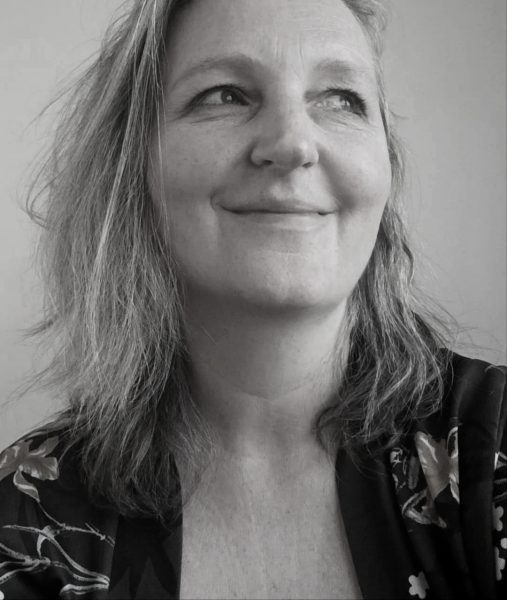
Foske de Kruijf woont in Midden-Nederland met partner en kinderen. Ze is schrijver (romans en artikelen) en redacteur en werkte voorheen als psycholoog. Foske is nieuwsgierig en breed geïnteresseerd, sensitief en creatief, ze houdt van levensverhalen. In haar werk laat ze zich leiden door hoe mensen in elkaar zitten, waarom we doen wat we doen, hoe we leren en groeien in elke fase van ons leven. Interessevelden zijn o.a. zingeving, feminisme, duurzaamheid, minimalisme, slow living, verbinding, persoonlijke groei, ouderschap, opvoeding, hoogbegaafdheid. Als voormalig psycholoog schrijft (praat, filosofeert, denkt…) ze graag over wat er binnenin en tussen mensen gebeurt. Contact, een blik, een mooi gesprek, aan het denken gezet worden, een ontluikende vriendschap of liefde, daar gaat het toch om? Als ze niet werkt, is ze buiten (met of zonder een leuk ander mens) of in andermans boek. Dit artikel schreef ze in het Engels en verscheen eerder op Third Factor.
Sensitive people are like the canaries back in the days of coal mining. We’re the first ones to notice when things are off, whether within ourselves, our family, or our world.
Back in the days of coal mining, miners would often bring a caged canary with them down into the mineshafts. The ever-present danger of suffocating from toxic coal fumes, invisible and odorless, meant that the demise or death of this sensitive little bird would alert the miners that the way forward was not safe for them.
I think about this metaphor often. I’ve been feeling a bit like one of these little birds myself. I don’t mean that intense, sensitive people are the first to die. But like the canaries back then, we are the first ones to notice when things are off, an imbalance within ourselves, our family, or our world. And I’ve come to see the value of these warning signs more and more with every passing year.
I first wrote this piece in July 2020, in the middle of the COVID-19 pandemic, here in Holland. Like the rest of the world, we had been living under lockdown for months, a disorienting, grief-heavy time that I suspect none of us has fully processed even now, years later.
At first, I felt a lot of fear, which was soon followed by an immense sadness. My heart broke hearing the grueling stories of doctors and nurses working around the clock, and of those who were suffering, the lonely, sick, and dying. I couldn’t grasp the magnitude of it all. I found myself weeping for them and for the world.
There was also a more personal sadness: the loss of our normal lives. The sudden stress of homeschooling, working from home, juggling everything at once. The very real prospect of getting sick, of losing loved ones. Death is an inevitable part of life, of course, no one ever really knows when it’s their time, but it had never felt so immediate before.
And yet. Amidst all that uncertainty and sadness, something unexpected emerged. I was almost afraid to name it then, and I still choose my words carefully now: for all its devastation, the pandemic also gave me something. The gift of time. Of stillness. Of slowing down long enough to hear myself think.
I want to be clear about what I was sitting with when I wrote that. We were lucky. We hadn’t lost anyone to the virus. We had all been sick, but mild cases, and we recovered. We both still had work. Our kids managed homeschooling without too much extra strain. I knew, even then, that the pandemic wore a different face for everyone, and I felt deeply for those who were struggling. Some still are.
But from within that particular pocket of privilege and stillness, something clarified for me. Something I’d sensed for a long time, like the canary in the coal mine, but hadn’t quite been listening to.
Before the lockdown, our days were full. Beautifully, exhaustingly full. Between careers, kids, family, and friends, the schedule never really let up. The world turned a bit too fast, for me, for the kids, perhaps for all of us.
Hurry, hurry, finish your breakfast, we gotta go to school. Give me a quick kiss, I’ve got to go to work. Race to the station or my train will leave without me. Piano lessons. Shower. Bed. Tomorrow we do it all again.
Normal, I suppose. But we were all tired and rushed, a lot of the time.
During school holidays we’d recover, briefly, before diving back in. The December before the pandemic, I remember craving peace and introspection and finding almost none, buried under birthdays, Christmas gatherings, the parents’ Christmas choir, the school music recital in early winter light, all of it lovely, all of it too much. By the end of the month we were completely spent, and then we all got sick.
Of course, I could have said no to things. But they were all good things, important things. Saying no felt like swimming against a strong current. And I kept wondering: is this really how we want to live?
The lockdown answered that question by force. All those activities fell away at once, and in the sudden quiet, something remarkable happened.
My boys slept longer. Their energy came back, along with a creativity I’d almost forgotten they had. They built things, invented songs, mapped out treasure hunts, buried time capsules. My eldest wondered aloud one morning why he was sleeping longer than usual. “Why do you think that is?” I asked him. “My head just feels calmer,” he said simply. And I realised I felt the same. I, too, was sleeping longer and deeper.
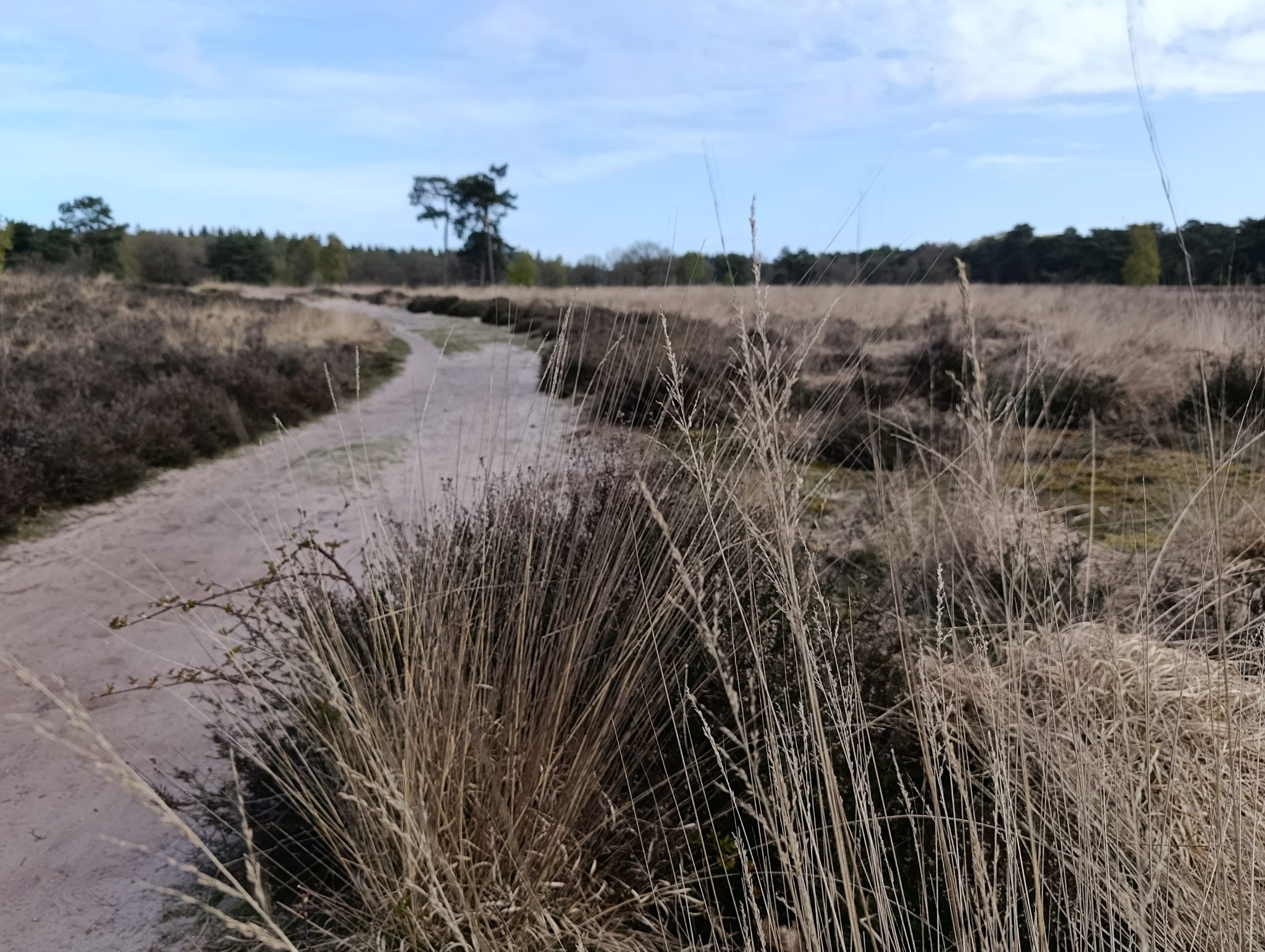
I rediscovered daily walks in the park and the woods, alone, or with my boys, in the crisp quiet of early morning before the workday began. We watched spring arrive, slowly, day by day. The trees got a shade greener. Tiny buds unwrapped themselves, fresh and almost translucent, before falling like soft white rain. The low sun shone through the beech forest and I could feel the breeze on my skin and the warmth on my face. For the first time in years, I was genuinely present.
For years I’d struggled with insomnia, waking after six hours no matter how tired I felt. During those months, I slept seven. My head was calmer, too.
This is what I’d felt for a long time, I realised. This is what that small, persistent inner voice had been trying to say: slow down.
I want to act on it more. Not just for myself, though, what better place to start? I want to empower others, too, to choose a simpler life, a slower life. To live more from within.
I imagine a world living at a slower pace. Fewer flights, fewer cars, shorter commutes, less noise. Perhaps more kindness, more honesty, more actual rest. Perhaps more of us listening to the canary inside ourselves before things get truly dire.
Why was it so hard, before the lockdown, to slow down? I’ve thought about this a great deal. Partly because the activities themselves were good, music, friends, family, contribution. Partly because everyone else was living at that speed, and not keeping up felt like weakness, like indulgence. Partly because I was afraid to miss out, and afraid for my kids to miss out.
But there’s also something deeper. Our brains and nervous systems simply haven’t had time to evolve alongside our rapidly changing world. We may adapt, over generations. But I don’t think we should want to. I’d rather slow the world down to fit the perfectly fine nervous systems we already have.
Not everyone has the same needs. But I believe slowing down matters to far more people than admit it, even the extroverts, even the ones who seem to thrive on pace. For me, the core has always been simple: togetherness. Time with my boys, with the people I love. Solitude. Sleep. Music. Books. Long mornings in the woods.
How strange, and perhaps telling, that it took a grueling pandemic to show me what I already knew.
I read back these words now and feel a complicated tenderness toward the woman who wrote them. She saw it so clearly. She felt it so precisely. And then the pandemic stretched on, and the stillness that had felt like a gift slowly became something else entirely.
Because the truth is, living through a prolonged crisis as a highly sensitive person, in a family full of neurodivergence, is not the same as a quiet spring of early walks and baking cookies. The months that followed were hard in ways I hadn’t anticipated. Working from home while also being homeschool teacher, cook, partner, and emotional anchor, all at once, all the time, turned out to be its own kind of grind. The canary was singing. I wasn’t always listening. Or perhaps I was trying to listen, but I couldn’t really hear her over all the noise. And I most definately couldn’t find the door to her cage yet.
A year after the pandemic, my body made the decision for me. I burned out. I spent a year being ill, and slowly, in that enforced stillness, something became undeniable: I could not go back to my work as a psychologist. Not because I had failed it or I didn’t love it, but because something in me had outgrown it, or perhaps had always been reaching past it. Past the way of living it brought with it.
What followed was one of the most clarifying periods of my life. I did a core talents analysis with Annemieke van Manen, and what emerged was not a surprise so much as a recognition, the kind where you finally see in clear language what you’d only ever felt. I restructured my life around those insights. I began writing. I became an editor and coach for other writers. I made room, structurally and deliberately, for my own pace, my own rhythm. For slow living, not as an idea, but as an actual way of being.
I’ve written two novels since then, Naar het Eiland and Naar het Noorden, both about love, and both, I realise now, quietly shaped by everything I understood during those strange, still pandemic months. A third novel, Mare en de zee, is coming in mid-2026.
The canary is still here. She’s just no longer in a cage. And I am hearing her song loud and clear.